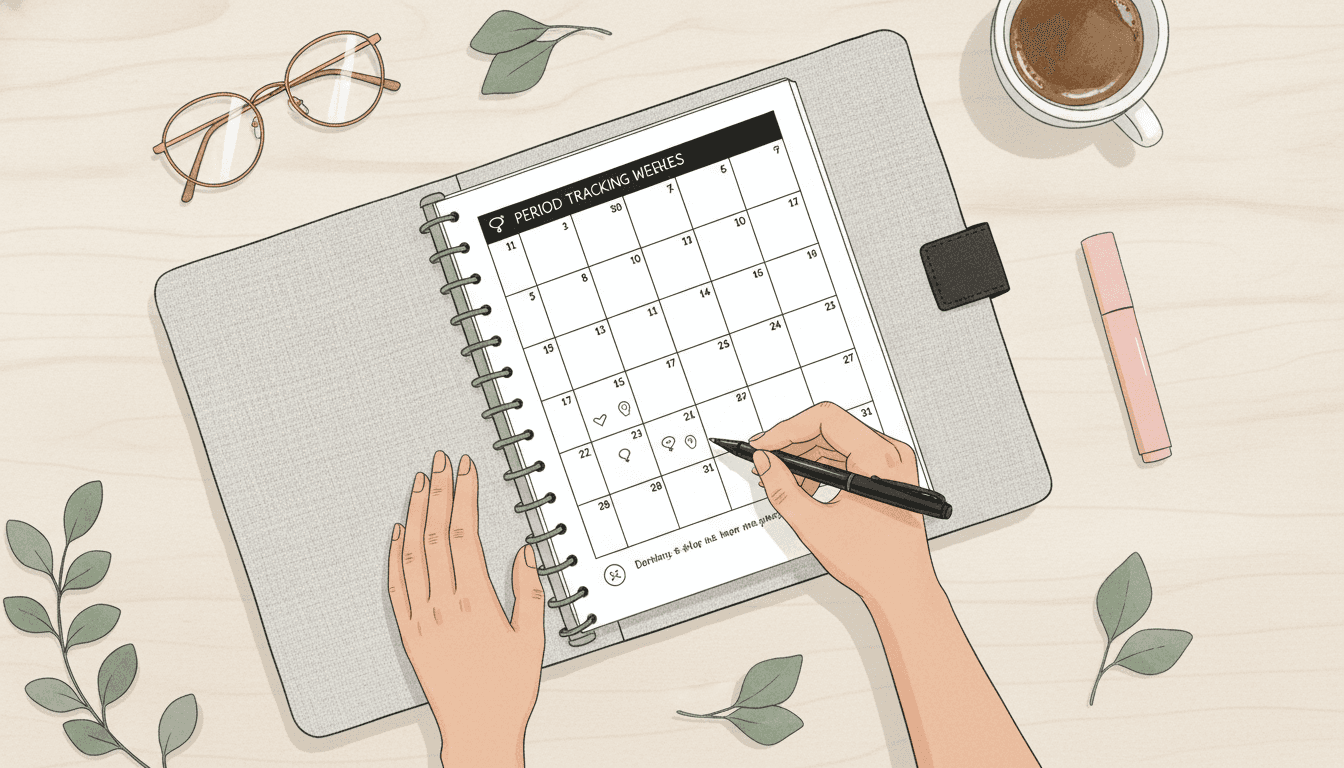
Most period tracking advice assumes you want an app.
Some people do. But a printable period tracker is useful for a different reason: it gives you a private, low-friction record that does not require another account, another password, or another place for sensitive health notes to live.
That matters because period tracking can include more than dates. A useful tracker may hold notes about bleeding, pain, mood, sleep, medication, sexual health, fertility questions, or symptoms you only want to discuss with a clinician. For many people, that information feels personal enough that paper is a better starting point.
The Privacy Case For Paper
Privacy concerns around period tracking apps are not imaginary.
Data Sharing: In 2021, the Federal Trade Commission finalized an order with Flo Health after alleging that Flo shared sensitive fertility-tracking data with marketing and analytics firms despite privacy promises.
Security Risks: Mozilla's Privacy Not Included reviews have flagged concerns in reproductive health apps regarding data sharing, advertising-related data, and law-enforcement language.
A printable tracker answers the question of "where does my data go?" simply: It stays with you unless you choose to share it.
Who A Printable Period Tracker Is Useful For
A printable tracker is especially useful if you:
Want to track without creating an account.
Prefer paper planners, binders, or handwritten notes.
Are worried about sensitive cycle data being stored online.
Want something that works without charging, syncing, or updating.
Need clearer notes for a doctor, midwife, therapist, or fertility appointment.
Are helping a teen or first-time tracker learn without adding another app.
The strongest use case is: "I want a private record that helps me remember what happened and explain it clearly when I need support."
Why Printable Beats A Blank Sheet
The problem with blank notes is that they become inconsistent. A good printable tracker gives you structure without forcing you into an app. It helps you capture:
Period start and end dates
Flow level and pain scores
Symptoms (sleep, mood, and energy changes)
Medication or relief used
Notes worth bringing to an appointment
Year-level patterns
Black-And-White Is A Practical Selling Point
Color printables can look attractive, but most people print at home. Black-and-white is a practical choice because:
It lowers ink costs.
It is easier to reprint monthly.
It stays legible even on lower-quality printers.
The best approach is providing choice: black-and-white for utility, color for aesthetics, and fillable PDFs for those who prefer to type before printing.
The Doctor-Ready Advantage
Most medical visits are short. A better system turns daily tracking into a clean summary for your provider:
When the cycle started and how long bleeding lasted.
Which days were heaviest and how severe pain became.
What symptoms repeated and how they impacted daily life.
What helped and what did not.
This helps you keep private details private while still bringing useful facts into the exam room.
What To Track Without Overdoing It
You do not need to track everything. Start with the basics:
Daily: Date, flow level, pain score, and one symptom note.
Monthly Closeout: Cycle length, heaviest-flow day, and top symptoms.
This is enough to build a useful record without it becoming a chore.
When Focused Add-On Pages Help
Focused pages help when you want better notes for specific health conversations, such as:
PMDD or PMS pattern timing.
PCOS-related cycle irregularity.
Severe pain (Endometriosis).
Perimenopause changes.
A Practical Privacy Workflow
If privacy is your priority, use the tracker intentionally:
Use shorthand for details you do not want others to read casually.
Fill in the closeout page at the end of the month.
Move only the most useful facts into the doctor-ready summary.
Share the summary page, not the full private workbook, with your provider.
Why IKnowMyBody's Printable Tracker Is Different
The IKnowMyBody printable period tracker is designed as a comprehensive workbook, not just a single chart. It includes:
Black-and-white and color workbook versions.
Fillable PDF companion pages.
12 monthly logs and a monthly closeout page.
Doctor-ready snapshots and a visit prep packet.
Focused add-on pages for specific health needs (PMDD, PCOS, etc.).
A privacy-first use guide.
FAQ
Is a printable period tracker private?
It is generally more private than an app because it doesn't require a cloud account or online sync. However, privacy still depends on where you physically store the pages.
Is black-and-white better than color?
It is better for home printing and saving ink, which is why we provide both options.
Is a printable tracker useful for doctor visits?
Yes. Summarizing your data into a "doctor-ready" format is usually more effective than showing a physician raw daily notes.
Can a printable tracker diagnose health conditions?
No. It helps you organize observations so you can have a clearer conversation with a medical professional.
Can I use it digitally?
Yes. You can use the PDF in annotation apps (like GoodNotes) or use the fillable form fields.
Try The Starter Sheet
If you are not sure whether paper tracking fits your routine, start with the starter sheet. Use it for one month. If the structure helps you remember what happened and summarize it clearly, the full workbook will give you that same system all year long.
Most period tracking advice assumes you want an app.
Some people do. But a printable period tracker is useful for a different reason: it gives you a private, low-friction record that does not require another account, another password, or another place for sensitive health notes to live.
That matters because period tracking can include more than dates. A useful tracker may hold notes about bleeding, pain, mood, sleep, medication, sexual health, fertility questions, or symptoms you only want to discuss with a clinician. For many people, that information feels personal enough that paper is a better starting point.
The Privacy Case For Paper
Privacy concerns around period tracking apps are not imaginary.
Data Sharing: In 2021, the Federal Trade Commission finalized an order with Flo Health after alleging that Flo shared sensitive fertility-tracking data with marketing and analytics firms despite privacy promises.
Security Risks: Mozilla's Privacy Not Included reviews have flagged concerns in reproductive health apps regarding data sharing, advertising-related data, and law-enforcement language.
A printable tracker answers the question of "where does my data go?" simply: It stays with you unless you choose to share it.
Who A Printable Period Tracker Is Useful For
A printable tracker is especially useful if you:
Want to track without creating an account.
Prefer paper planners, binders, or handwritten notes.
Are worried about sensitive cycle data being stored online.
Want something that works without charging, syncing, or updating.
Need clearer notes for a doctor, midwife, therapist, or fertility appointment.
Are helping a teen or first-time tracker learn without adding another app.
The strongest use case is: "I want a private record that helps me remember what happened and explain it clearly when I need support."
Why Printable Beats A Blank Sheet
The problem with blank notes is that they become inconsistent. A good printable tracker gives you structure without forcing you into an app. It helps you capture:
Period start and end dates
Flow level and pain scores
Symptoms (sleep, mood, and energy changes)
Medication or relief used
Notes worth bringing to an appointment
Year-level patterns
Black-And-White Is A Practical Selling Point
Color printables can look attractive, but most people print at home. Black-and-white is a practical choice because:
It lowers ink costs.
It is easier to reprint monthly.
It stays legible even on lower-quality printers.
The best approach is providing choice: black-and-white for utility, color for aesthetics, and fillable PDFs for those who prefer to type before printing.
The Doctor-Ready Advantage
Most medical visits are short. A better system turns daily tracking into a clean summary for your provider:
When the cycle started and how long bleeding lasted.
Which days were heaviest and how severe pain became.
What symptoms repeated and how they impacted daily life.
What helped and what did not.
This helps you keep private details private while still bringing useful facts into the exam room.
What To Track Without Overdoing It
You do not need to track everything. Start with the basics:
Daily: Date, flow level, pain score, and one symptom note.
Monthly Closeout: Cycle length, heaviest-flow day, and top symptoms.
This is enough to build a useful record without it becoming a chore.
When Focused Add-On Pages Help
Focused pages help when you want better notes for specific health conversations, such as:
PMDD or PMS pattern timing.
PCOS-related cycle irregularity.
Severe pain (Endometriosis).
Perimenopause changes.
A Practical Privacy Workflow
If privacy is your priority, use the tracker intentionally:
Use shorthand for details you do not want others to read casually.
Fill in the closeout page at the end of the month.
Move only the most useful facts into the doctor-ready summary.
Share the summary page, not the full private workbook, with your provider.
Why IKnowMyBody's Printable Tracker Is Different
The IKnowMyBody printable period tracker is designed as a comprehensive workbook, not just a single chart. It includes:
Black-and-white and color workbook versions.
Fillable PDF companion pages.
12 monthly logs and a monthly closeout page.
Doctor-ready snapshots and a visit prep packet.
Focused add-on pages for specific health needs (PMDD, PCOS, etc.).
A privacy-first use guide.
FAQ
Is a printable period tracker private?
It is generally more private than an app because it doesn't require a cloud account or online sync. However, privacy still depends on where you physically store the pages.
Is black-and-white better than color?
It is better for home printing and saving ink, which is why we provide both options.
Is a printable tracker useful for doctor visits?
Yes. Summarizing your data into a "doctor-ready" format is usually more effective than showing a physician raw daily notes.
Can a printable tracker diagnose health conditions?
No. It helps you organize observations so you can have a clearer conversation with a medical professional.
Can I use it digitally?
Yes. You can use the PDF in annotation apps (like GoodNotes) or use the fillable form fields.
Try The Starter Sheet
If you are not sure whether paper tracking fits your routine, start with the starter sheet. Use it for one month. If the structure helps you remember what happened and summarize it clearly, the full workbook will give you that same system all year long.
Table of Contents